


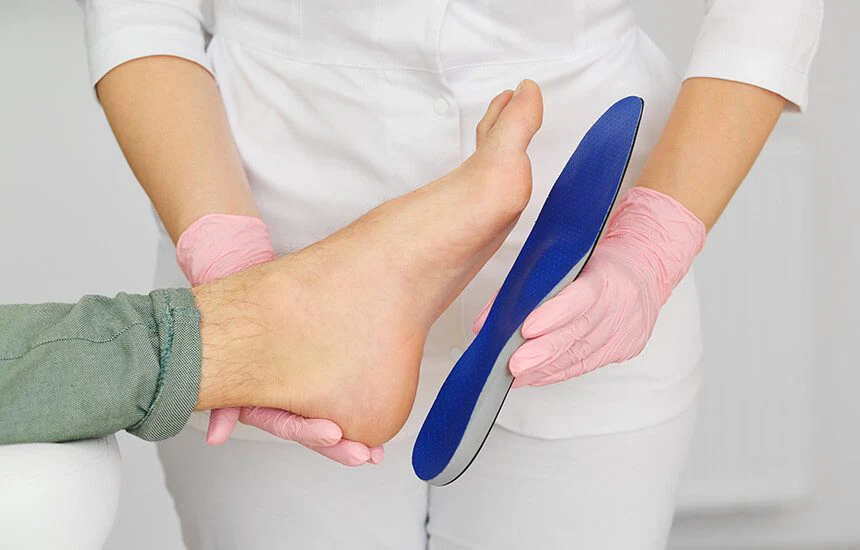
Plantar fasciitis is a common condition that involves inflammation of the thick band of tissue running across the bottom of your foot. This tissue, known as the plantar fascia, connects your heel bone to your toes and acts as a shock absorber. When tension on this bowstring-like tissue becomes too great, small tears can occur, leading to irritation and daily discomfort. Plantar fasciitis often causes sharp heel pain, but the right footwear modifications can make daily activities much more comfortable. Custom orthotics are prescription shoe inserts designed by healthcare professionals to support the specific structure of your foot. These devices help treat the condition by modifying the forces applied to the bottom of the foot during movement.
Arch Support and Shock Absorption
Managing plantar fasciitis requires addressing the physical stress placed on your lower extremities. Every step you take transfers your body weight through your feet, and this can aggravate an already irritated plantar fascia. Custom orthotics are specifically designed to manage this daily impact.
By utilizing precise measurements of your feet, these inserts offer structural reinforcement. The orthotic devices cradle the arch and prevent it from collapsing excessively during walking or standing. Custom orthotics provide targeted arch support, and they help distribute physical pressure evenly across your entire foot.
Key mechanical benefits include:
- Cushioning the heel pad to reduce impact during the heel-strike phase of walking.
- Decreasing the overall tension placed on the plantar fascia band.
- Providing a stable base of support for prolonged periods of standing.
Improved Alignment and Personalized Fit
Over-the-counter shoe inserts offer generic padding, but they cannot account for your unique biomechanics. Custom orthotics are fabricated from specific molds or 3D scans of your feet. This personalized manufacturing process confirms that the insert fits your exact foot shape, arch height, and structural nuances.
Proper foot alignment plays a role in managing lower extremity mechanics. Conditions like overpronation, in which the foot rolls inward excessively, can increase daily strain on the plantar fascia; custom orthotics help guide the foot into a more neutral alignment. By supporting proper mechanics, these customized devices minimize abnormal movements that contribute to tissue irritation. This tailored approach helps the orthotic device work with your natural walking pattern.
Non-Invasive Treatment
Finding an appropriate management strategy for foot discomfort often begins with conservative methods. Orthotics represent a practical, non-invasive step in managing structural foot issues. Healthcare providers frequently recommend orthotics as part of a comprehensive, conservative management plan. You can explore invasive options for persistent foot pain, or try conservative approaches like custom shoe inserts first. They easily transfer between different pairs of shoes. This allows you to maintain consistent support whether you are at work or exercising.
Ask About Plantar Fasciitis Today
Dealing with chronic foot discomfort can interrupt your routine, but you have supportive options available. A thorough evaluation by a podiatrist or orthopedic specialist is the first step toward understanding your specific biomechanical needs. These professionals can assess your gait, analyze your foot structure, and determine if custom inserts are the right choice for your situation. Reach out to a foot specialist to discuss your symptoms and learn more about your management options.







