


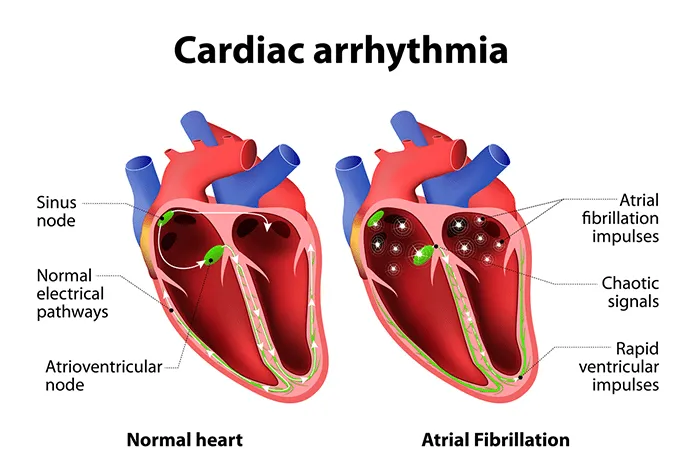
Atrial fibrillation is linked to stroke risk. When your heart beats irregularly, blood flow inside your heart changes. Slowed blood flow sometimes occurs, and clots may develop.
Symptoms of Atrial Fibrillation
Recognizing warning signs supports management. Symptoms of atrial fibrillation appear suddenly, or they can develop gradually. If you have heart palpitations, you should rest. These sensations can happen when you are active or sitting quietly. You may feel pounding or racing heartbeats that last seconds or minutes. Common symptoms include:
- Heart palpitations
- Shortness of breath
- Fatigue or weakness
- Dizziness or lightheadedness
- Chest discomfort or pain
- Reduced ability to exercise
Tracking daily symptoms gives helpful information to share with your doctor. Writing down changes in how you feel helps your care team update your plan. Because symptoms may vary day to day, accurate tracking supports ongoing management. Do not ignore new or worsening sensations, and always communicate with your healthcare team about changes that concern you.
Medications for Stroke Prevention
Beta-blockers slow the heart rate, and calcium channel blockers improve heart function. Doctors prescribe drugs for this condition. Both medications help your heart work efficiently, so you have fewer symptoms and feel more stable. Your doctor considers your health and medication tolerance when choosing a treatment plan. Doctors may recommend anticoagulant medications for stroke prevention. Direct oral anticoagulants like apixaban, rivaroxaban, and dabigatran are alternatives to warfarin.
Your doctor weighs factors such as bleeding history, kidney function, and other health concerns when choosing medication. Blood-thinning drugs lower the chance of clots forming in your heart. These medications support smoother blood flow, and they reduce blood pooling. Taking medications consistently supports your treatment plan. Skipping doses could affect how your treatment works, and regular use matters.
Modifications for Healthier Living
Daily habits influence your heart health. Small adjustments to your daily routine help support your treatment goals. Limiting alcohol and caffeine lowers the chance of irregular heart rhythms for some people. Reading labels on drinks or snacks is helpful, since caffeine is in tea, chocolate, or some medications. Lifestyle changes help manage high blood pressure and diabetes. Maintaining a healthy weight helps your heart, and enjoyable exercise improves stamina. Not everyone needs to join a gym; daily walks, gentle stretching, or light cycling benefit your heart. Listen to your body and start slow, adding more as your comfort allows. Drinking enough water throughout the day helps you stay hydrated. Follow your provider’s advice to support your heart health goals. As you create new habits, you may have a chance at improving your heart health.
Take Action for Your Health
Managing atrial fibrillation requires proactive daily choices. Your condition requires attention, but you can help control the risks. When you follow medical advice, your symptoms may improve. Discuss these available treatments with your doctor soon. Review your current medication schedule, and plan your lifestyle updates. If you need help, medical professionals are available to support you. Ask questions about your specific stroke risk factors. Your doctor can clarify medical instructions or adjust your plan.







