


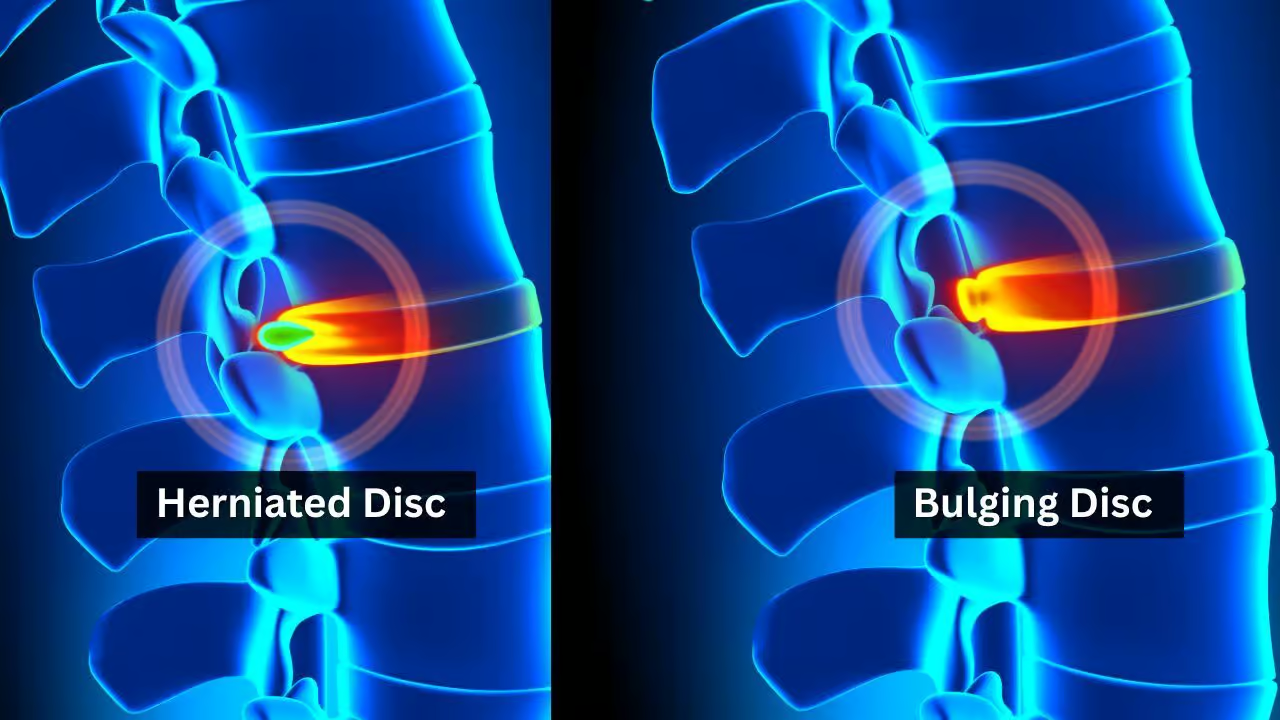
Spine conditions affect many people, and they often cause pain, limited mobility, and reduced quality of life. Diagnosing these conditions accurately is the first step toward effective treatment. Medical imaging plays a central role in this process, giving physicians a detailed view of the spine’s structure and helping guide treatment decisions. Here is more information on how spine conditions are diagnosed and when spine surgery is necessary:
What Are Spine Conditions?
Spine conditions refer to a broad category of disorders that affect the vertebrae, discs, nerves, and surrounding tissues of the spinal column. They range in severity from mild discomfort to debilitating pain, which interferes with daily function. Left untreated, spine conditions can worsen over time, and they sometimes require surgical intervention. Spine surgery may be recommended when conservative treatments fail to provide adequate relief.
What Are the Different Types?
Several distinct spine conditions are treated by a neurosurgeon, each with its own characteristics and implications for treatment:
- Herniated discs: Occur when the soft inner material of a spinal disc pushes through its outer casing, putting pressure on nearby nerves.
- Spinal stenosis: A narrowing of the spinal canal that compresses the spinal cord or nerve roots, often causing pain, numbness, or weakness in the limbs.
- Degenerative disc disease: The gradual breakdown of intervertebral discs due to aging or wear, leading to chronic pain and reduced spinal flexibility.
Each of these conditions presents differently. Diagnostic imaging helps clinicians distinguish between them with precision.
How Are They Diagnosed?
Diagnosis typically begins with a thorough clinical evaluation, which includes a review of the patient’s medical history and a physical examination. Physicians assess symptoms such as pain location, range of motion, and neurological function. Imaging studies are then ordered to confirm findings, and they help neurosurgeons gather detailed structural information.
X-rays provide a clear view of the bony structures of the spine, and they are particularly useful for detecting fractures, alignment issues, and degenerative changes. For soft tissue evaluation, such as disc herniation or nerve compression, more advanced imaging is required. MRI (magnetic resonance imaging) offers high-resolution images of discs, nerves, and surrounding soft tissues without radiation exposure. CT (computed tomography) scans provide detailed cross-sectional images of bone, helping the physician understand what is occurring within the spine.
What Is Spine Surgery?
Spine surgery is a medical procedure performed to correct structural problems in the spine that cause pain or neurological symptoms, improving a patient’s quality of life. It is typically recommended after non-surgical treatments have not provided sufficient relief. The goal is to restore stability, and some procedures also relieve nerve compression.
Common spine surgeries include discectomy and spinal fusion. Disectomy removes a herniated disc fragment pressing on a nerve, while spinal fusion joins two or more vertebrae to eliminate painful motion between them. Minimally invasive techniques may be used, allowing for smaller incisions, less tissue disruption, and faster recovery times. The type of surgery recommended depends on the specific diagnosis. Imaging studies completed during the diagnostic phase are reviewed before any surgical procedure is performed. Precise imaging translates into more targeted and effective surgical outcomes.
Learn More About Spine Conditions
Spine conditions vary widely in type and severity, but accurate diagnosis is key to any successful treatment plan. Medical imaging, from X-rays to MRI and CT scans, gives clinicians the detailed information they need to make informed decisions, whether treatment involves conservative management or spine surgery. Understanding this process helps patients actively engage with their care. Speak with a neurosurgeon to discuss your symptoms and learn which imaging studies may be appropriate for you.







