


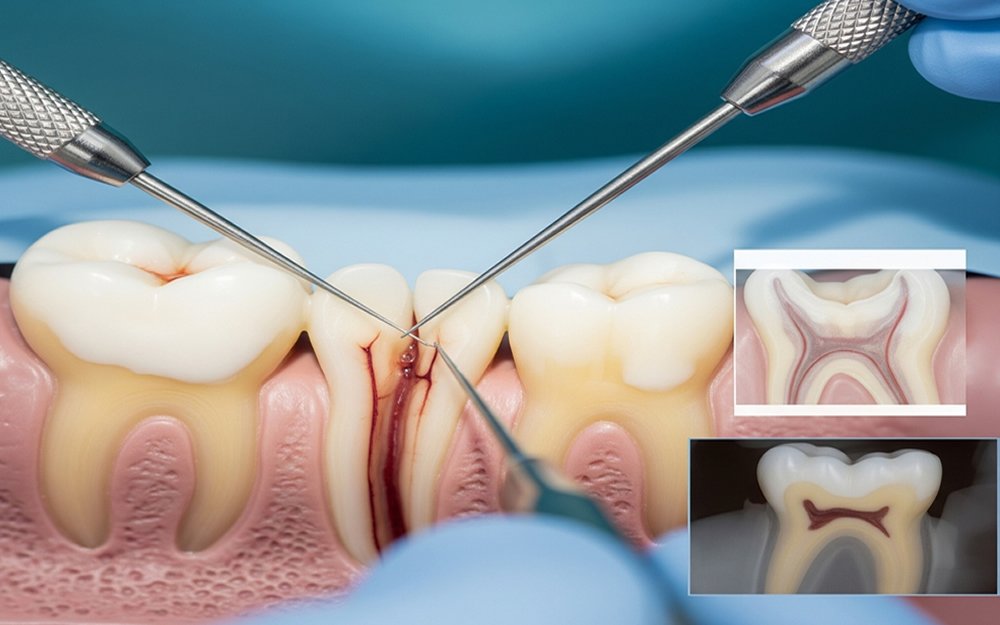
Root canal therapy is a dental procedure that addresses problems inside a tooth, and it aims to preserve natural tooth structures while reducing the need for extractions. Its primary purpose is to remove infected or damaged pulp, relieve discomfort, and help maintain the natural tooth. By cleaning and sealing the affected area, root canal therapy aims to preserve the tooth’s function and appearance, supporting long-term oral health. Here’s information on root canals and their benefits:
When To Get a Root Canal
A root canal is recommended when the inner portion of a tooth becomes irritated or damaged. This area, called the pulp, contains soft tissue, nerves, and blood vessels. When it is affected, a general dentist or endodontic specialist may evaluate whether this treatment is the appropriate next step.
What Are Some Symptoms?
Not every dental symptom needs this therapy, and not every tooth that needs treatment causes obvious pain. Several signs may lead a dentist to investigate whether root canal therapy is needed. These can include tooth sensitivity to hot or cold temperatures, pain when chewing, tenderness around the tooth, or swelling of the gums. Some dental concerns can cause noticeable discoloration of a tooth or a pimple-like bump on the gums. A professional exam can help determine whether an issue involves the tooth pulp, the gums, or another underlying condition.
When Are They Recommended?
This therapy is recommended when a tooth has deep decay, requires repeated dental work, or has a crack or injury. A damaged tooth often appears normal on the outside, but tests and imaging can reveal changes within the tooth. The goal of treatment is to clean the inside of the tooth, then seal it to protect it.
A dentist may also discuss root canals when inflammation inside a tooth does not improve on its own. This can happen after untreated cavities or trauma. In these situations, early evaluation matters, but treatment timing depends on the condition of the tooth and the surrounding tissue.
What To Expect
Root canal therapy usually begins with an exam, dental images, and a discussion of the proposed treatment plan. During this procedure, the dentist or endodontist creates a small opening in the tooth to access the inside. The affected tissue is removed, the canals are cleaned and shaped, and the area is filled with a sealing material. Many people return to normal activity soon after the appointment, but the treated tooth needs a crown or other final restoration. This step helps restore shape and function. The exact process varies by tooth location, tooth condition, and whether someone has had prior dental work.
After treatment, people are given care instructions for eating, brushing, and attending follow-up visits. Mild soreness may occur for a short period, but ongoing or worsening symptoms should be reported to the dental office. Follow-up visits help the provider check healing and make any final restorations or adjustments.
When To Visit a Specialist
A specialist may be appropriate when a tooth has narrow canals, complex anatomy, repeated infection, or prior root treatment. Endodontists focus on diagnosing tooth pain and treating conditions inside the tooth. Someone may also be referred to a specialist if dental symptoms persist, the diagnosis is unclear, or the tooth is difficult to treat due to its location. A referral does not always mean the problem is severe, but it may mean the case requires more focused care.
Contact a Root Canal Specialist
Endodontic therapy is a common dental procedure used to treat issues within a tooth to preserve natural teeth. This therapy may be recommended for deep decay, injury, or internal inflammation, but the best approach for your needs depends on a full dental evaluation. If you have tooth pain or any swelling, contact an endodontist for an assessment and an explanation of your options.







