


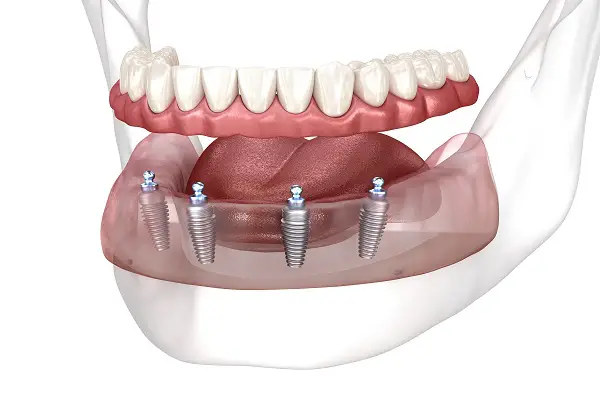
All-on-4 is a full-arch tooth replacement method that uses four dental implants to support a fixed set of prosthetic teeth. It is often discussed for people who need to replace most or all of their teeth in the upper arch, the lower arch, or both. During treatment, the dentist or oral surgeon evaluates bone support before planning implant placement. The specialist then removes any teeth that cannot be kept, and they attach a temporary or final prosthesis. Here’s more information on the All-on-4 implant procedure and what to expect:
Replacing a Full Arch
The first step to any dental procedure is a consultation and exam. This usually includes a review of an individual’s dental history, a visual exam, digital scans, X-rays, or 3D imaging. These records help the care team assess key factors such as:
- Bone Levels
- Gum Condition
- Bite Position
- Mouth Spacing
After planning, the provider maps the locations of the four implants. Commonly, two implants are positioned toward the front of the jaw, and two are angled toward the back. This dental implant setup helps distribute pressure across the arch, and it can reduce the need for additional implant sites.
If damaged or loose teeth remain in the arch, they will need to be removed before implant placement. The implants are then inserted into the jawbone at the planned positions. A temporary set of teeth may be attached the same day or soon after, but the exact treatment process depends on the stability of implant placement and an individual’s health factors.
When getting an All-on-4 dental implant procedure, individuals should expect follow-up visits after surgery. These appointments are used to check healing, review hygiene, and adjust the temporary teeth if needed. The final prosthesis is usually placed after the implants and surrounding tissues have had time to heal. Dental implants must fuse with the jawbone before the final restoration can be finished, which is a process called osseointegration.
Holding Prosthetic Teeth in Place
The prosthetic arch is not held in place like a traditional removable denture; prosthetic arches connect to implants that are secured in the jaw. This creates a fixed restoration that stays in place during normal daily use and also changes how bite forces are distributed across the arch. Several parts work together in this system:
- The Implant Acts as the anchor in the bone
- The Connector Joins the Implant to the Prosthesis
- The Prosthetic Arch Replaces the Visible Teeth
Each part is selected to fit the patient’s anatomy and treatment goals.
Temporary teeth are often lighter and simpler in design than the final restoration. Their purpose is to provide function and appearance during healing while limiting excess force on the implants. The final prosthesis is made after the provider confirms fit, tissue response, and bite alignment. Patients are usually given instructions on how to clean around the prosthesis. These may include special brushes, flossing aids, or water-based cleaning tools. Regular maintenance visits are fundamental because the provider needs to evaluate the prosthesis and the surrounding tissue over time.
Reducing Treatment Times
One reason All-on-4 is commonly recommended is efficiency. By using four implants to support a full arch, the treatment plan can involve fewer implant sites than other fixed full-arch approaches. This simplifies the surgical phase and reduces the number of procedures some people need. This approach may also reduce the need for longer staging between steps. In selected cases, extractions, implant placement, and delivery of a temporary arch can happen in a short timeframe. This allows some patients to leave with fixed teeth rather than waiting through a fully removable phase.
Every individual’s full treatment timeline depends on their healing, bone quality, and the design of the final prosthesis. Even when treatment moves quickly, planning remains detailed. The provider still needs imaging, bite records, and a clear surgical guide or placement strategy. Faster treatment does not mean less precision, but it may mean fewer appointments spread over a long period.
Learn More About All-on-4 Implants
All-on-4 treatment is a method for replacing a full arch with a fixed prosthesis supported by four implants. If you want to learn whether this option fits your needs, schedule a consultation with a qualified dental provider. They can explain the timeline, materials, and maintenance involved for your specific situation.







