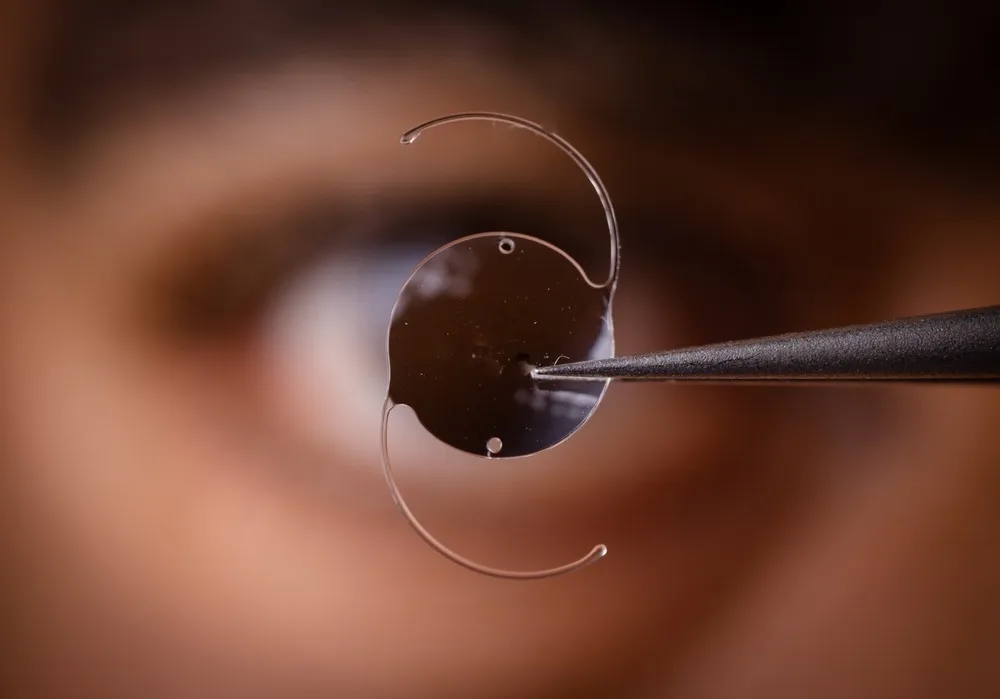
Cataracts cloud the eye’s natural lens, and they gradually dim vision and make everyday tasks more difficult. Femtosecond laser technology has improved how surgeons approach cataract removal, offering precision that traditional techniques may not match. Here is more information on cataracts and femtosecond cataract surgery:
Understanding Cataracts and Their Effects
Cataract surgery removes the clouded parts of the eye lens. A cataract forms when proteins in the eye’s natural lens break down and clump together, creating a cloudy area that scatters incoming light. This cloudiness develops gradually, and many patients do not notice the change until their vision has deteriorated significantly.
The effects on daily life can range from mild inconvenience to serious visual impairment. Patients might experience:
- Blurry or hazy vision that worsens in bright light
- Difficulty reading fine print or recognizing faces at a distance
- Increased sensitivity to glare, especially when driving at night
- A yellowing or fading of colors
Surgery becomes a viable option when the cataract interferes with quality of life and glasses or contact lenses no longer provide adequate correction. An eye care professional evaluates the density of the cataract, the patient’s overall eye health, and the degree to which vision loss is affecting daily function before recommending a surgical approach.
Explaining Cataract Surgery
Extracapsular cataract extraction, or ECCE, involves an incision to remove the clouded lens in one piece. This method is typically reserved for cases where the cataract is too dense or advanced to be broken down using ultrasound. ECCE also requires the implantation of an artificial intraocular lens, and this replaces the natural lens.
Femtosecond laser-assisted cataract surgery uses an ultrafast laser to perform key steps of the procedure with exceptional accuracy. The laser emits pulses measured in femtoseconds, which are quadrillionths of a second, and these pulses create precise tissue separations without generating significant heat. Surgeons use this technology to automate steps that were previously performed by hand. The result is a highly controlled surgical process.
Exploring the Surgical Steps
The procedure follows a structured sequence, and each step builds on the last to safely remove the clouded lens.
- Corneal incision: The laser creates a self-sealing incision in the cornea, which is the clear dome-shaped surface at the front of the eye. Because the incision is computer-guided, its size and placement are highly reproducible from patient to patient.
- Anterior capsulotomy: The laser then opens the thin membrane surrounding the lens. A circular, precisely sized opening in the lens capsule gives the surgeon a stable foundation for the next stage of the procedure.
- Cataract removal: The laser softens and breaks apart the cloudy lens before the surgeon removes the fragments using gentle suction. Because the laser does much of the initial work, less ultrasound energy may be needed to complete the removal, which supports a smoother recovery.
These advanced steps provide a more precise, safe, and minimally invasive cataract removal surgical process.
Learn More About Cataract Surgery
Femtosecond laser-assisted cataract surgery offers a precise, technologically advanced approach to removing a clouded lens. Signs you should ask your doctor about cataract surgery include difficulty with nighttime driving and double vision in one eye; other signs include colors appearing faded or yellowed and frequent changes in your glasses prescription. If you want to learn more about treatment for cataracts, schedule a consultation with an eye care professional today.