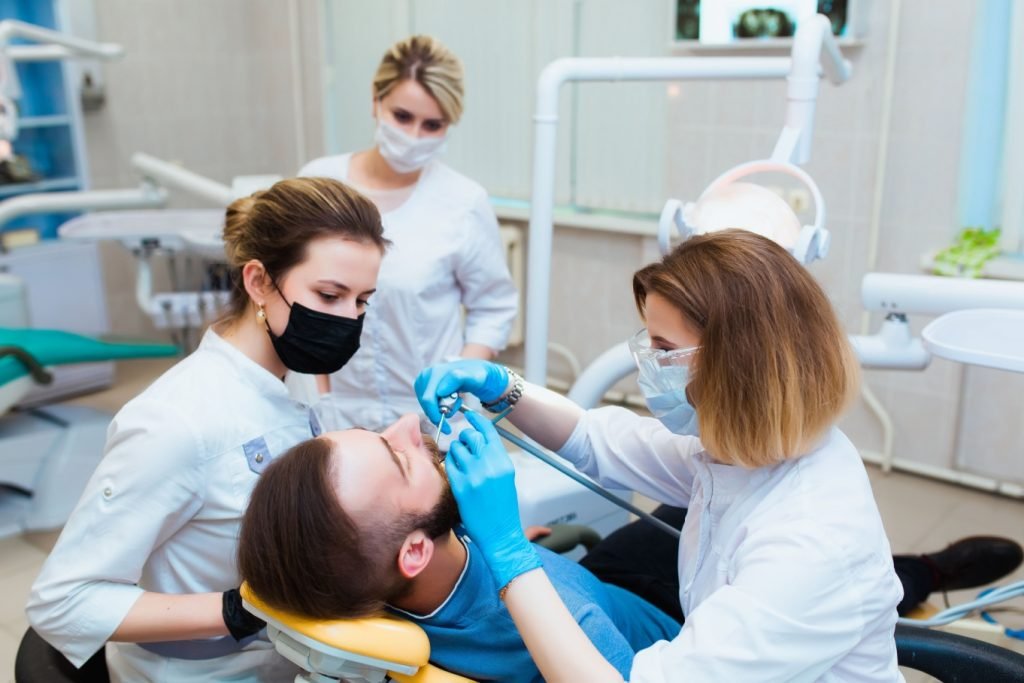
Good dental hygiene depends on consistent at-home care and regular support from a dental professional. Most people benefit from visiting a dentist every six months, though your schedule may vary based on your individual needs. You should also make an appointment if you notice tooth pain, bleeding gums, persistent bad breath, or sensitivity to hot and cold foods. Regular visits give dental providers the opportunity to monitor changes and guide your care over time. Here’s how dentists help you maintain good dental hygiene over time:
By Providing Routine Care
During a routine dental appointment, a dentist examines your teeth, gums, and mouth to assess their current condition. This examination often includes a professional cleaning first to remove plaque and tartar that regular brushing may miss. Dentists also review your brushing and flossing habits, and they may suggest adjustments to your daily routine. These recommendations are tailored to your specific situation.
A dentist can point out areas you tend to overlook, helping you clean more effectively at home. Routine care also involves dental X-rays; these images allow dentists to view areas that are not visible during a standard examination. Reviewing this information over multiple visits helps your provider track your oral health across time.
By Promoting Preventive Services
Preventive care is a central part of modern dental services, and there are several services that reduce the likelihood of common oral problems before they develop. These services complement the habits you maintain at home. Fluoride treatments are one example of preventive care; dentists may apply fluoride to strengthen the outer surface of your teeth. Dental sealants offer another option, providing a protective coating for the chewing surfaces of back teeth.
Dental specialists also share guidance on diet and lifestyle factors that influence oral health. They may explain how sugary foods and drinks affect your teeth, and they can suggest practical changes to your habits. By offering this information, dentists help you make informed decisions about your daily choices.
Early detection is a key benefit of regular dental visits. When a dentist identifies an issue in its early stages, treatment options are often more straightforward. Small cavities, for instance, can be addressed with fillings before they progress. To detect oral conditions early, dentists regularly examine your gums for signs of inflammation and recession. They also check for changes in your mouth’s soft tissues.
By Treating Oral Conditions Early
During your examinations, dentists look for anything unusual and document their findings to compare at future visits. If a dentist notices a developing concern, they discuss the available options with you at that same appointment. This conversation allows you to understand your situation and choose a timely course of action. Addressing problems promptly can help you avoid more involved procedures later.
Visit a Dentist Regularly
Through routine examinations, professional cleanings, and preventive services, dentists give you the care you need to maintain your smile. Regular appointments also create opportunities to identify and address concerns at an early stage. Your daily habits remain fundamental to your health, but the advice a dentist provides can strengthen those efforts. By combining consistent home care with regular visits, you can stay proactive about your oral health. To learn about your current oral health needs, contact a dentist near you.