

Body imaging continues to evolve as a valuable tool in modern medicine, offering detailed views of internal structures that support accurate evaluation and decision-making. Medical imaging can now contribute to earlier detection, clearer diagnosis, and comprehensive health assessments across a wide range of conditions. Here is more information on several medical imaging advances for comprehensive health assessments:
Detailed Cross-Sectional Imaging
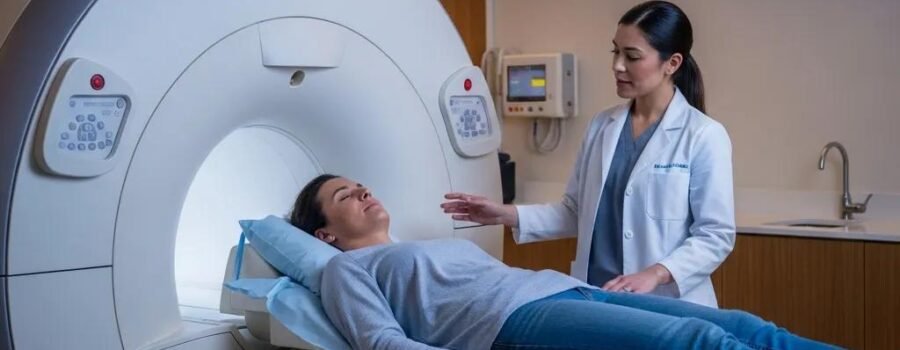
When clinicians require in-depth views of internal structures, they often utilize computed tomography (CT) scans. A CT scan produces detailed cross-sectional images, and it helps identify issues in the abdomen or pelvis. Magnetic resonance imaging (MRI) is another diagnostic tool.
If a physician needs to evaluate blood vessels, they will frequently order a specialized MRI. This specific test clearly highlights vascular structures, and it helps detect aneurysms or blockages. Although CT scans use radiation, MRI technology relies on magnetic fields and radio waves.
MRI machines capture excellent images of soft tissues and the nervous system. Patients receive no radiation exposure during an MRI. Physicians evaluate the medical condition, and they choose the most appropriate body imaging method.
Real-Time Organ Assessment
While MRI provides static images, ultrasound allows clinicians to view organs in real time. This noninvasive technique uses high-frequency sound waves. The sound waves bounce off internal structures, and a computer translates them into visual data. Clinicians use ultrasound technology for several key purposes. Here are some of them:
- Evaluating blood flow: Technicians monitor circulation through major arteries and veins.
- Examining abdominal organs: Doctors review the liver, kidneys, and gallbladder for abnormalities.
- Monitoring fetal health: Obstetricians track a baby’s growth and development during pregnancy.
- Getting immediate feedback: Ultrasound provides immediate feedback, which makes it highly helpful for rapid diagnostics.
The technician moves a handheld transducer over the skin. The device captures the necessary body imaging data, and the doctor can review the results immediately.
Fast Foundational Evaluation
An X-ray is an old form of body imaging. Even though newer technologies exist, doctors still rely on X-rays for fast evaluations. These scans require very little preparation, and they produce images in a matter of minutes.
Whenever a patient complains of joint pain, an X-ray is often the primary evaluation tool. Orthopedic specialists review these films to diagnose arthritis. The images show the exact spacing between bones and reveal any degenerating cartilage. When a patient presents with a potential fracture, an X-ray offers the clearest view of the bones.
Broader Imaging Assessment
Diagnostic processes often require multiple body imaging methods. While one test may detect a mass, another test can determine its exact composition. Physicians regularly combine these tools, and this comprehensive approach often improves overall diagnostic accuracy. When doctors evaluate complex medical conditions, they use a combination of body imaging technologies for these reasons:
- Confirming initial findings: A provider may use an MRI to investigate an abnormality seen on an initial X-ray.
- Guiding surgical procedures: Surgeons use real-time ultrasound alongside preoperative CT scans to safely navigate internal anatomy.
- Monitoring treatment progress: Oncologists compare consecutive scans to evaluate tumor shrinkage during therapy.
This multimodal strategy reduces diagnostic errors, and it helps practitioners deliver effective care. Before a facility performs these overlapping tests, the medical team reviews the patient’s history carefully. They check for allergies to contrast dyes, and they verify any previous radiation exposure.
Schedule Your Body Imaging Appointment
As medical technology advances, diagnostic imaging continues to offer precise insights into human anatomy. These modern tools detect diseases early, and they can significantly improve patient outcomes. Contact a reputable radiology practice near you to schedule your body imaging appointment today.