

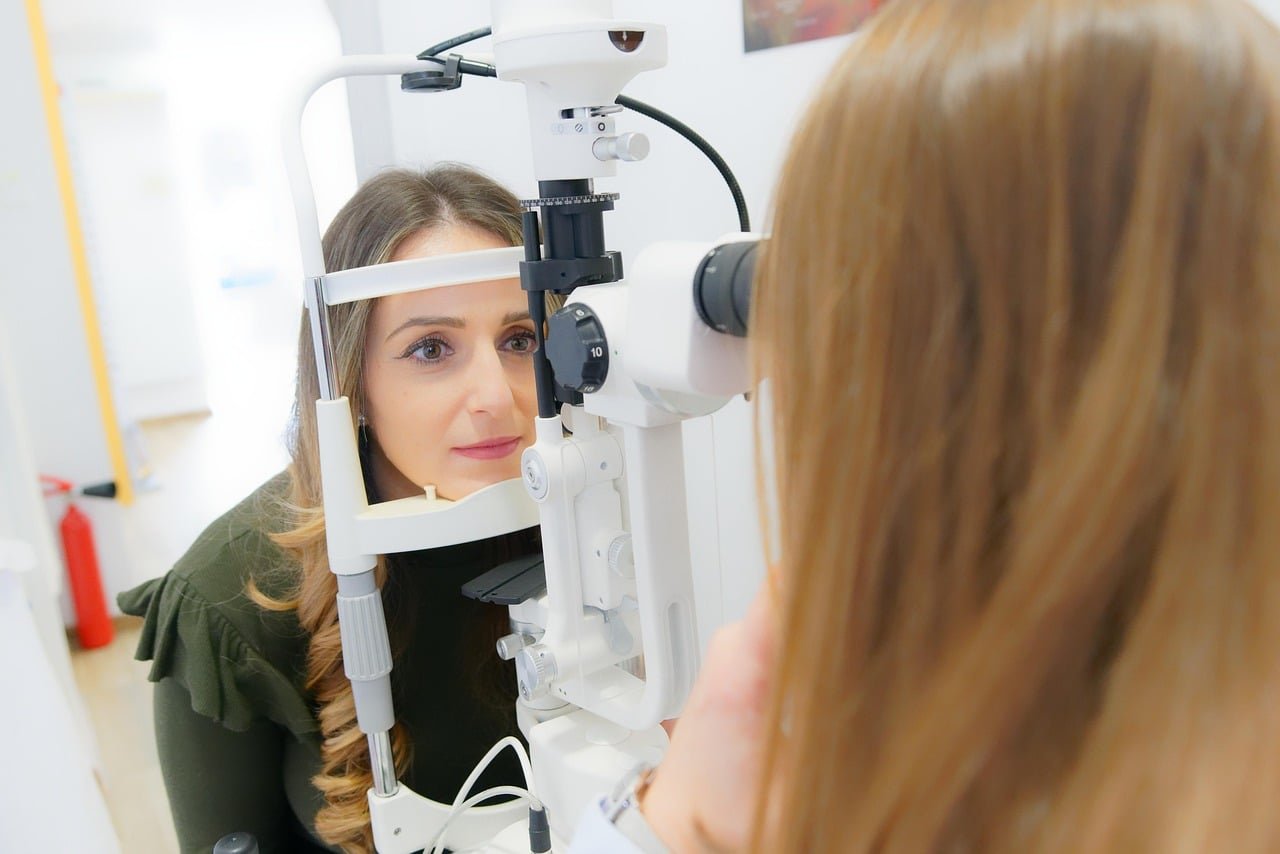
A comprehensive eye exam checks your vision and the overall health of your eyes. Eye specialists can spot sudden problems like pink eye, and a comprehensive exam looks at the full picture. Since the visit includes several steps, it can detect many different types of eye issues. Here is more information on each part of the appointment:
Medical History Discussion
Your eye doctor starts with questions about your health, and you answer them before any testing begins. Since many body conditions affect the eyes, the doctor asks about diabetes, high blood pressure, and thyroid disease. Expect questions about your family’s eye history as well. Glaucoma and macular degeneration run in families.
If you take medications or supplements, bring a written list with names and doses. Some drugs change eye pressure or tear production. You may have blurry vision or headaches, so describe when they started and how often they occur during your eye exam.
Visual Tests
Next, the doctor measures the sharpness of your vision. While you cover one eye, you read letters from a chart across the room. The letters get smaller on each line, and your results appear as a fraction like 20/20. Other visual tests include the following:
- Visual sharpness: Checks how clearly you see letters and shapes at different distances.
- Routine eye pressure check: Measures the pressure inside your eye, often with a quick puff of air.
- Visual movement: Tracks how smoothly your eyes follow a moving light or object.
- Focusing ability: Shows how well your eyes adjust when switching between near and far objects.
- Peripheral vision: Measures your side vision while you look straight ahead.
Potential Eye Dilation Test
Your doctor may place dilating drops in your eyes next, and the drops widen your pupils. This process is typically fast. Once your pupils open wider, the doctor gets a clearer view of the retina and optic nerve.
Dilation is not part of every exam, and your doctor decides based on your age and risk factors. Doctors may recommend it when you have diabetes, a family history of glaucoma, or new symptoms. Many elderly adults receive dilation at routine visits.
The effects of the drops last for several hours. Since driving may be unsafe afterward, arrange a ride home. Your near vision may blur, and bright light may feel harsh, so pack sunglasses.
Possible Prescription Glasses Testing
If your vision tests show blurriness, the doctor performs a refraction test. You look through a device called a phoropter. The doctor flips between pairs of lenses, and you pick the sharper option each time. This test may lead to one of a few results:
- A new or updated glasses prescription
- A contact lens prescription, which requires a separate fitting
- A change to your current lenses
Bring your current glasses or contact lens box to the exam. If you use screens for long hours, mention it to the doctor. Your daily habits affect lens choices, and the doctor may suggest options like computer glasses.
Schedule an Eye Exam
Many clinics book comprehensive eye exams online, and some offer evening or weekend times. When you book, ask whether your plan covers the exam or what the self-pay price is. Bring your insurance card and photo ID to the appointment. If dilation is likely, block off extra time in your schedule.